
Uncategorized
What Is Live Resin? A Complete Guide
Nov
If you’ve spent time browsing a cannabis concentrate menu in dispensaries like cali canna, you’ve probably noticed live resin listed alongside shatter, wax, and cannabis rosin. It’s one of the most popular cannabis concentrates, known for its strong aroma, rich flavor, and ability to preserve more of the plant’s natural compounds. But what makes it different, and is it worth the extra cost?
Live resin is a cannabis concentrate made from fresh-frozen plants rather than flower that has been dried and cured. This process helps preserve the natural terpenes and cannabinoids responsible for each strain’s unique characteristics. Whether you’re comparing concentrates, considering a live resin cart, or simply curious about how it’s made, this guide covers what you need to know.
What Is Live Resin?
Live resin is a cannabis concentrate made from freshly harvested plants that are frozen shortly after harvesting. Unlike traditional concentrates, which typically use dried and cured flower, live resin uses fresh-frozen material to preserve more of the plant’s original chemical profile.
The difference comes down to how cannabis is handled after harvesting. During the drying and curing process, exposure to oxygen, heat, and time can cause some volatile terpenes to break down or evaporate. These aromatic compounds give different cannabis strains their distinctive smells and flavors.
Freezing the plant immediately after harvesting helps slow these changes. As a result, more of the original terpene profile survives extraction and carries over into the finished product.
This is why live resin often has a stronger aroma and more noticeable strain-specific flavor than concentrates made from cured cannabis. Depending on the strain, you might notice citrus, fruity, earthy, or pine-like notes.
The word “live” refers to the condition of the starting material, not the finished concentrate. It doesn’t contain a living cannabis plant. Instead, it describes how the plant is preserved before extraction.
How Is Live Resin Made?

Understanding how live resin is made helps explain why it differs from other cannabis concentrates. The process requires careful temperature control, specialized equipment, and properly handled starting material.
1. Harvesting and Flash-Freezing
The process begins with freshly harvested cannabis. Instead of allowing the flowers to go through the usual drying and curing process, producers quickly freeze the material to preserve its natural compounds.
This is known as flash-freezing. Some producers freeze whole plants, while others freeze trimmed flowers. The goal is to preserve as much of the original terpene and cannabinoid content as possible.
2. Extraction
Once frozen, the plant material goes through an extraction process. Many producers use solvents such as butane or propane to separate cannabinoids and terpenes from the plant.
Low temperatures help protect delicate aromatic compounds during extraction. Professional producers generally use a closed-loop system to contain and recover the solvent throughout the process.
3. Purging and Finishing
After extraction, the solvent is removed using specialized equipment and controlled conditions. This process is called purging.
The resulting concentrate can have different textures depending on how it’s processed. Some products remain sticky and saucy, while others develop a thicker consistency similar to badder or budder.
The finished product is then tested and packaged for sale. Laboratory testing helps confirm cannabinoid content and check for residual solvents and other contaminants.
Live Resin vs. Live Rosin
Live resin and live rosin both start with fresh-frozen cannabis, but their extraction methods are different.
Live resin uses solvents, commonly butane or propane, to extract cannabinoids and terpenes. Live rosin is solventless, meaning it doesn’t rely on chemical solvents during extraction.
Instead, rosin is produced using heat and pressure to separate the desired compounds from cannabis material. Both products can preserve the plant’s natural characteristics, but live rosin often costs more because of its production requirements.
Live Resin vs. Other Cannabis Concentrates
Not all cannabis concentrates are made the same way. Understanding their differences can help you choose a product that matches your preferences.
Live Resin vs. Cured Resin
The main difference between live resin and cured resin is the starting material.
Live resin uses fresh-frozen cannabis, while cured resin is made from dried and cured cannabis flower or trim. The drying and curing process changes the plant’s chemical profile, which can affect the final concentrate’s aroma and flavor.
Live resin generally offers a fresher, more noticeable terpene profile. Cured resin can still deliver good flavor and potency, but its aroma may be more subdued.
Live resin is often more expensive because fresh-frozen material requires additional handling and specialized storage. Cured resin can be a more affordable option for consumers who want a quality concentrate without paying extra for fresh-frozen extraction.
Live Resin vs. Distillate
Distillate is another popular cannabis concentrate, but it’s produced differently from live resin.
During distillation, cannabis extracts undergo additional refinement to isolate specific cannabinoids, usually THC. This creates a highly concentrated oil with a relatively limited natural terpene profile. Manufacturers may add terpenes afterward to provide flavor and aroma.
Live resin, on the other hand, retains more of the original plant compounds. It typically contains a broader combination of cannabinoids and terpenes rather than focusing primarily on one cannabinoid.
The difference between live resin and distillate often comes down to flavor and composition. Distillate is popular in vape cartridges because of its consistency and high THC concentration. Live resin appeals to consumers who prefer a concentrate that retains more of the original strain characteristics.
Live Resin vs. Shatter and Wax
Shatter and wax are traditional cannabis concentrates often made using dried and cured plant material.
Shatter has a firm, glass-like consistency that can break into smaller pieces. Wax is softer and has a more malleable texture. Live resin can have a sticky, saucy, sugary, or creamy consistency depending on how it’s processed.
One major difference is the terpene profile. Live resin is generally known for its stronger aroma and more noticeable strain-specific flavor. Shatter and wax can also be flavorful, but their characteristics depend on the starting material and extraction method.
What Does Live Resin Look, Smell, and Feel Like?
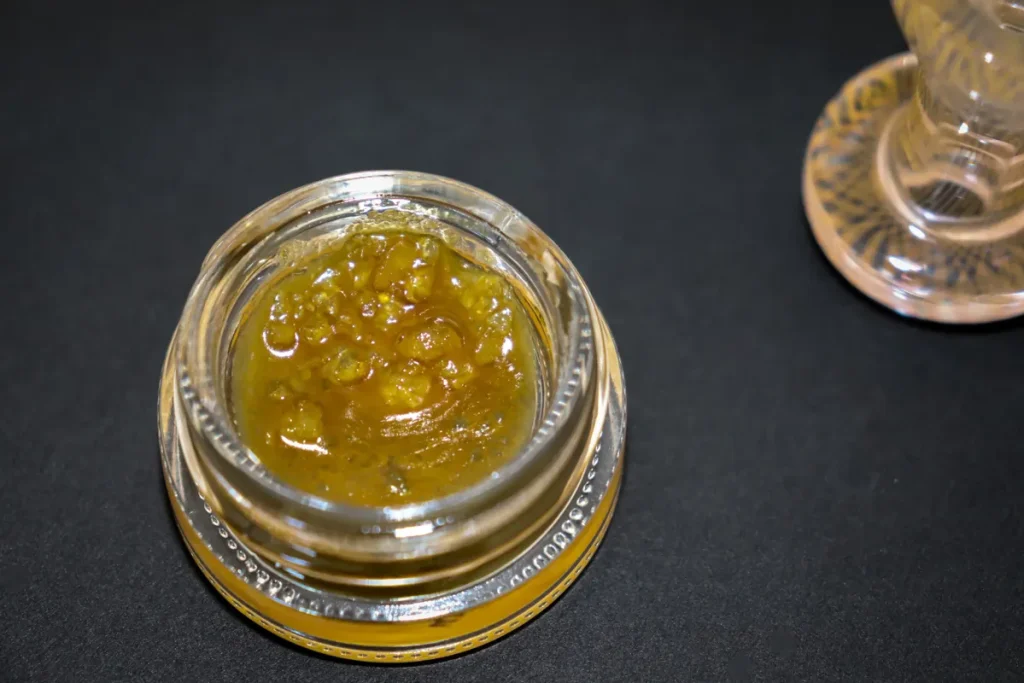
Live resin comes in several textures and appearances. Depending on the extraction and finishing process, you might find it as wet sugar, thick sauce, badder, budder, or a sticky concentrate.
Its color can range from pale yellow and golden amber to darker shades. Color alone isn’t a reliable way to determine quality because the strain, starting material, and production methods all influence the final appearance.
Aroma is one of the main characteristics that makes live resin appealing. Since the extraction process aims to preserve natural terpenes, a quality product often has a noticeable strain-specific smell.
You might notice fruity, citrusy, herbal, earthy, or pine-like aromas. These differences come from the combination of aromatic compounds present in the original cannabis plant.
The experience also depends on the strain, cannabinoid content, and individual tolerance. Live resin can contain high levels of THC, so it’s important to check the product information before use.
How to Use Live Resin

There are several ways to consume live resin, although the best option depends on your equipment and experience with cannabis concentrates.
Dabbing
Dabbing is a common way to use live resin. It involves heating a surface in a dab rig and applying a small amount of concentrate for vaporization.
Many concentrate enthusiasts prefer this method because it allows them to experience the product’s aroma and flavor directly. Temperature matters because excessive heat can affect delicate terpenes and change the flavor.
Live Resin Vape Carts
A live resin cart offers a convenient alternative to traditional dabbing. These cartridges contain processed live resin oil and are designed to work with compatible vape batteries.
Unlike some distillate vape carts, live resin cartridges are valued for retaining more of the original cannabis strain’s terpene profile. They’re also portable and don’t require a separate dab rig.
Before purchasing a live resin cartridge, check the product label for ingredients, cannabinoid information, and third-party testing.
Adding Live Resin to Flower
Another option is combining a small amount of live resin with cannabis flower. Some consumers place the concentrate on top of ground flower in a bowl or use it alongside flower in compatible smoking equipment.
This approach combines the characteristics of both products, although the concentrate may not be used as efficiently as it would be with a suitable vaporization device.
How to Store Live Resin
Proper storage is important because live resin contains delicate aromatic compounds that can degrade when exposed to heat, light, air, and moisture.
To help maintain its quality, keep the concentrate in an airtight glass container. Store it in a cool, dark location away from direct sunlight and temperature changes.
Refrigeration may help preserve live resin for longer periods. However, allow a cold container to reach room temperature before opening it to help prevent condensation from forming inside.
A few additional storage tips include:
- Use airtight containers: Limit exposure to oxygen.
- Avoid direct sunlight: Heat and light can affect the terpene profile.
- Keep temperatures stable: Repeated temperature changes can affect consistency.
- Use clean tools: Avoid introducing contaminants when handling the concentrate.
- Check product instructions: Follow the manufacturer’s storage recommendations.
How long live resin stays fresh depends on its quality, packaging, and storage conditions. Its aroma and flavor may gradually change over time, even when stored properly.
How to Find Quality Live Resin Products
With so many cannabis concentrates available, choosing a quality product can feel overwhelming. A few simple checks can help you compare your options.
Check the product label. Look for the strain name, cannabinoid information, batch details, and manufacturing date.
Look at the terpene profile. Some manufacturers provide terpene percentages and individual terpene information. This helps you compare products based on their aromatic characteristics.
Consider the extraction method. Reputable producers should provide information about whether their concentrate uses solvent-based or solventless extraction.
Check third-party testing. Laboratory testing provides information about cannabinoid content, residual solvents, pesticides, and other potential contaminants.
Compare textures and formats. Live resin products are available in different consistencies, including badder, sugar, and sauce. You can also find them in pre-filled vape cartridges.
Consider your experience level. Live resin can be a potent cannabis concentrate. Check the THC content and approach unfamiliar products with caution.
Who Should Consider Other Cannabis Products?
Live resin isn’t necessarily the right choice for every cannabis consumer. Although its flavor and terpene profile make it appealing, there are a few reasons someone might prefer another product.
First, live resin can be more expensive than traditional concentrates. Fresh-frozen starting material and specialized extraction contribute to its price.
Second, loose concentrates require suitable equipment and careful handling. A live resin vape may be more convenient, but it still requires a compatible battery.
Finally, people who are new to cannabis may find concentrates too potent for their preferences. Lower-potency products may be easier to approach.
Conclusion
Live resin is a cannabis concentrate made from fresh-frozen plants rather than dried and cured flower. This approach helps preserve more of the original terpenes and cannabinoids, giving the finished product its distinctive aroma and flavor.
Whether you prefer traditional concentrates, a convenient live resin cart, or another cannabis product, understanding how each option is made can help you make an informed choice. Live resin offers an interesting balance of flavor, aroma, and strain-specific characteristics, making it a popular option among concentrate enthusiasts.
Frequently Asked Questions About Live Resin
Is live resin stronger than regular cannabis flower?
Live resin generally has a higher THC concentration than cannabis flower. However, potency varies between products, so check the label rather than assuming every concentrate has the same strength.
Can you smoke live resin in a regular pipe?
You can combine live resin with cannabis flower in a compatible pipe, but using the concentrate by itself isn’t ideal. Its sticky consistency can make it difficult to handle. A suitable concentrate vaporizer or dab rig is generally better suited to this product.
How long does live resin stay fresh?
Storage conditions determine how long live resin maintains its quality. Keeping it in an airtight container away from light, heat, and moisture can help preserve its aroma and consistency.
Does live resin show up on a drug test?
Yes. Live resin commonly contains THC, which can produce metabolites detected by standard cannabis drug tests. The extraction method doesn’t change this.
Is live resin the same as live rosin?
No. Both products start with fresh-frozen cannabis, but their extraction methods differ. Live resin uses solvents such as butane or propane, while live rosin is solventless and relies on heat and pressure.
What is badder live resin?
Badder is a type of cannabis concentrate with a soft, creamy consistency similar to cake batter. Live resin badder is made from fresh-frozen cannabis and finished to achieve this texture.


