
Uncategorized
How to Use a Dab Pen: A Beginner’s Guide to Wax Vaporizers

Oct
Dab pens have changed how many cannabis consumers approach concentrates. Where a traditional dab rig once required a torch, a nail, and a steady hand, a small battery-powered device now handles the same job in seconds. Cali Canna carries the concentrates that pair with them, from badder and crumble to shatter, sugar, and live resin diamonds, along with vape carts, pods, and disposables for anyone who wants a simpler setup. If you want to learn how to use a dab pen, though, the format raises practical questions: how much concentrate goes into the chamber, which temperature setting makes sense, and how often the device needs cleaning. This guide to wax covers each part of the process in plain terms, as a guide for beginners and seasoned users alike, and it shows how to use a dab pen the right way from the first charge to the last clean.
What Is a Dab Pen and How Do Dab Pens Work?
A dab pen is a portable vaporizer built for cannabis concentrate rather than dried flower. This is where the question of how do dab pens work usually starts, because the device is often confused with a standard vape pen. Concentrates like wax, shatter, budder, live resin, rosin, and distillate carry far more THC by weight than flower, often 60 to 90 percent, so a small amount of concentrate produces a strong effect.
To dab concentrate, the device heats the concentrate until it begins to vaporize. Nothing burns, so there is no ash and far less smoke than a pipe or joint. Because the material is potent, the session itself is short: one or two draws are usually enough for a casual consumer. That short, clean hit is one of the main benefits of using a dab pen.
Wax Pens vs Cartridge Batteries: The Difference Between a Dab Pen and a Vape Pen
The term dab pen covers two different products, and the differences between a dab pen and a vape pen trip up a lot of newcomers. So what’s the difference?
A wax pen has an open chamber. The user places a piece of concentrate directly onto a coil or into a ceramic cup, then presses the power button to heat it. This is the closest portable equivalent to a traditional dab. Most wax vaporizers in this category are also called wax pens, and they give you full control over the material and the dose.
A cartridge battery, sometimes called a 510 battery, holds a pre-filled oil cartridge. Many cartridges, also called vape carts, screw on, and nothing is loaded by hand. The user attaches the cartridge and inhales. These devices are easier to use, but they offer less control over dose and material.
Unlike vape pens that run on pre-filled vape cartridges, a wax pen asks you to load each session yourself. That is more work, but it is also the reason many people prefer a dab pen over a standard vape. The short version of the dab pen vs vape pen question is control versus convenience. Most of this guide deals with wax pens, since they involve the most decisions. Cartridge users can skip ahead to the temperature and maintenance sections.
Choosing the Right Dab Pen

Choosing the right dab pen comes down to a few features. Look at the coil type, the chamber design, and the voltage range. Two more details matter for beginners. First, many dab pens use conduction heating, where the coil touches the material directly, while others use convection and warm the air around it. Conduction is simpler and cheaper, and convection is gentler on flavor. Second, dab pens use USB-C, micro-USB, or a proprietary charger, so confirm the port before you buy.
A good dab pen battery should be portable, easy to grip, and simple to load. Most dab pens have 3 to 4 voltage settings, which is plenty. A pen that has adjustable power and a well-sealed chamber will be easier to live with. Keep the size of the chamber in mind too, because a chamber that is too big tends to take more concentrate than you need. If you are comparing a wax vape against a cartridge setup, the wax vape wins on flavor and the cartridge wins on speed.
The Parts of a Dab Pen
Battery
The battery powers the coil and usually offers several voltage settings. A power button fires the coil on most models, and a fully charged one lasts longer than you would think. Most pens use a 510-thread connection, the industry standard, though some models use proprietary fittings. A button-activated battery fires when you press and hold the button. A draw-activated battery fires when you inhale.
Atomizer and Coil
The atomizer holds the heating element. Coils are commonly made of quartz, ceramic, or a combination. Quartz heats quickly and preserves flavor. Ceramic heats more evenly and tends to be gentler on the material. Some atomizers use dual or triple coils to increase surface area. This is the part of the pen that heats the material, so treat it with care.
Chamber
The chamber, sometimes called the bowl, is where the concentrate sits. A well-designed chamber keeps material away from the airflow holes so that melted wax does not clog the device.
Mouthpiece
Mouthpieces are usually glass or ceramic. Glass stays cooler, and ceramic resists buildup. Some models include a splash guard to keep hot oil away from the user’s mouth.
Airflow Holes
Small holes near the base of the atomizer let air pass through. Blocked airflow is one of the most common reasons a pen stops producing vapor.
Before the First Session
A few items make the process smoother:
- A fully charged battery, so fully charge your dab pen before you start
- A dab tool, toothpick, or small scoop, and knowing how to use a dab tool matters more than you would guess
- The chosen concentrate, kept cool
- Isopropyl alcohol and cotton swabs for cleanup
- The device manual, since voltage settings vary by brand
Beginners should start with a small amount. Concentrate hits harder than flower, and the effects arrive within a few minutes. For a dab pen for the first time, one small draw is the goal, followed by a wait of at least ten minutes before any decision about a second.
How to Use a Dab Pen: Step by Step
Step 1: Charge the Battery
Most pens ship with a partial charge. A full charge takes one to two hours on a USB or wall charger. Indicator lights show status: green or blue for full, red or blinking for low.
Two cautions apply here. First, the charger must match the device, since an adapter with the wrong output can damage the battery. Second, the pen should not be left charging unattended overnight. A buyer named Elena, who picked up her first wax pen last spring, learned this the ordinary way, by leaving a pen on a charger for a full day and finding a battery that no longer held a charge.
Step 2: Prepare the Concentrate
Texture determines technique, and it depends on which types of wax you have. Shatter is brittle and cracks when pressed, so it is easiest to handle after a few seconds of warmth from the fingers. Common wax, budder, and rosin are soft and pick up easily on a tool. Distillate is thick and sticky and works better in a cartridge than in an open chamber.
The right amount for a single session is roughly the size of a grain of rice. A small amount of concentrate goes a long way. Anything larger wastes material, floods the coil, and forces a longer cleaning session.
Step 3: Load the Chamber
The concentrate goes directly onto the coil or into the ceramic cup. It should not touch the walls of the chamber, and it should not cover the airflow holes. Overloading is the single most common beginner mistake. A chamber that looks half full is usually overfull.
Once loaded, the pen should be kept upright so the material does not run into the airway before it heats.
Step 4: Choose a Temperature
Voltage and temperature settings change the experience more than any other variable.
Low (about 2.5 to 3.0 volts): Best for flavor. Terpenes survive at lower heat, so the taste stays close to the original material. Vapor is thin.
Medium (about 3.0 to 3.8 volts): A balance of flavor and vapor production. Most users settle here.
High (above 3.8 volts): Large clouds, harsher hits, and a faster, stronger effect. High heat also degrades terpenes and can scorch the concentrate, leaving a burnt taste.
Devices with preset temperatures usually label the settings with colors such as green, blue, and red. The exact mapping varies by brand, so the manual is worth reading once.
Step 5: Inhale
The user presses the power button and waits one second before drawing. Inhale slowly. A slow, steady pull over two to four seconds works better than a hard drag, which pulls air past the coil too quickly and produces little vapor. Release the button, hold the vapor briefly, then exhale.
Two or three short draws are usually enough for one session. Effects appear within two to ten minutes, depending on the person and the concentrate. Waiting between draws prevents an unexpectedly strong result.
Step 6: Cool Down and Clean Up
After the session, the pen should be turned off and set upright to cool. Warm concentrate that stays on the coil will harden into a dark residue. Wiping the chamber with a dry swab while it is still slightly warm removes most of it before it sets.
Benefits of Using a Dab Pen
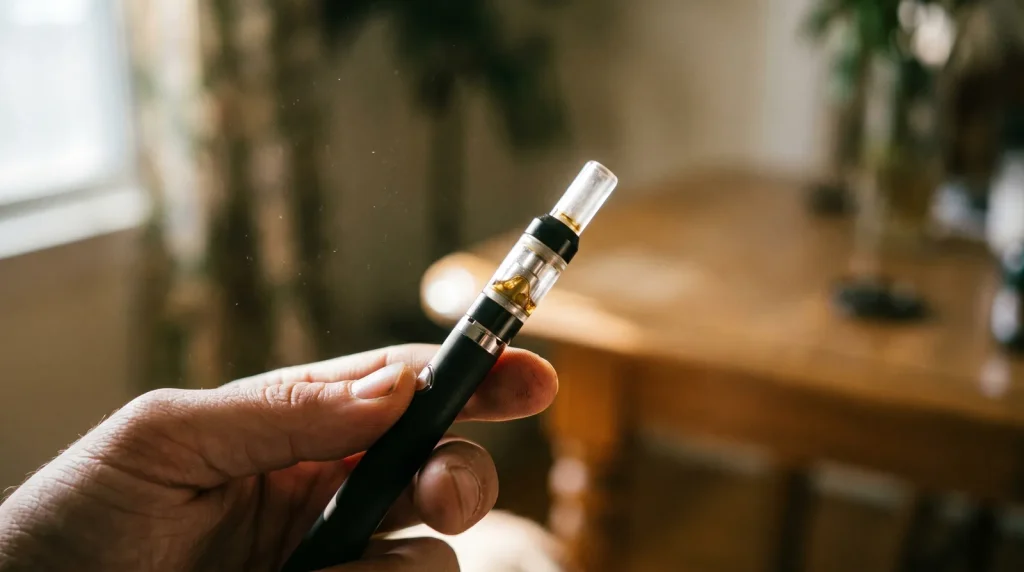
Portability is the headline. A dab pen is small enough to fit in a pocket, which makes it an easy way to enjoy concentrates on the go. There is no torch, no fragile glass, and no setup. The pen heats in seconds, so a session takes minutes rather than the ritual a rig demands.
The second benefit is efficiency. Because the material is potent, a grain of rice sized dose is often all it takes. That makes a gram of concentrate last a long time compared to flower. For anyone weighing vape or dab, the dab pen wins on flavor and control, while a standard vape pen wins on convenience. Both are valid ways to consume cannabis, and plenty of people keep a dab pen experience for evenings at home and a vape pen for everything else.
Common Mistakes to Avoid
- Loading too much. A rice-grain-sized portion is enough.
- Holding the button without inhaling. This overheats the coil and burns the material.
- Pressing the button for too long. Most pens have a ten-second cutoff for a reason.
- Skipping maintenance. Residue builds up, airflow drops, and flavor turns bitter.
- Using the wrong charger. Mismatched voltage can ruin a battery.
- Expecting flower-like effects. Concentrates are stronger and faster, and the difference surprises many first-timers.
Cleaning and Maintenance
A dab pen that is cleaned regularly performs better and lasts longer. The routine takes about five minutes.
- Remove the mouthpiece and atomizer from the battery.
- Dip a cotton swab in 91 percent isopropyl alcohol and wipe the inside of the chamber.
- Clean the mouthpiece and the threads with a fresh swab.
- Let every part dry completely before reassembly. Alcohol residue affects taste.
- Never submerge the battery in liquid.
Coils typically last two to four weeks with regular use. A coil that produces weak vapor, tastes burnt, or looks blackened should be replaced. Replacement coils are inexpensive, and Cali Canna lists compatible parts alongside its devices so buyers can match components without guesswork.
Storage and Safety
Concentrates should be kept in a cool, dark place, ideally in a silicone container or glass jar. Heat makes wax runny and degrades cannabinoids over time. Store wax concentrates as carefully as you store the device itself.
A few safety habits matter as well:
- Store devices and concentrates away from children and pets.
- Do not drive after use.
- Start low and go slow, particularly with high-potency concentrates.
- Check local laws. Cannabis rules vary widely by state and country, and a device that is legal in one place may not be in another.
Why Buy From Cali Canna
Cali Canna carries dab pens, replacement coils, batteries, and a range of cannabis concentrates like wax, shatter, and live resin in one place. The company organizes products by category so that a buyer can compare a wax pen against a cartridge battery without jumping between sites. Orders ship discreetly, and the site includes product details such as voltage ranges and coil type, which matter more than most first-time buyers expect.
Conclusion
Using a dab pen comes down to a short list of habits: charge the battery, load a small amount, pick a moderate temperature, draw slowly, and clean the device after each session. The equipment is simple, and the learning curve is short. Most problems, from weak vapor to a burnt taste to clogged airflow, trace back to one of two causes: too much material or too little maintenance. Fix those, and a dab pen could become your go-to way to enjoy concentrates. Cali Canna stocks the devices and concentrates to get started, and the catalog covers everything from entry-level pens to replacement parts, and the pen offers an easy path to a better session for anyone willing to learn the basics.
Frequently Asked Questions
How much concentrate should go into a dab pen?
About the size of a grain of rice for a single session. Larger loads waste material and clog the chamber.
How long does a dab pen battery last?
Most batteries handle 30 to 60 draws per charge, depending on voltage and coil type. Higher settings drain faster.
Can a dab pen be used with dried flower?
No. Dab pens are built for concentrates. Flower requires a dry herb vaporizer, which uses a different heating chamber and temperature range.
How often should the coil be replaced?
Every two to four weeks with regular use. Weak vapor, a burnt taste, or visible blackening means it is time.
What is the difference between a dab pen and a vape cartridge?
A dab pen has an open chamber that the user loads by hand. A cartridge battery holds a pre-filled oil cartridge that screws on and is replaced when empty.


